
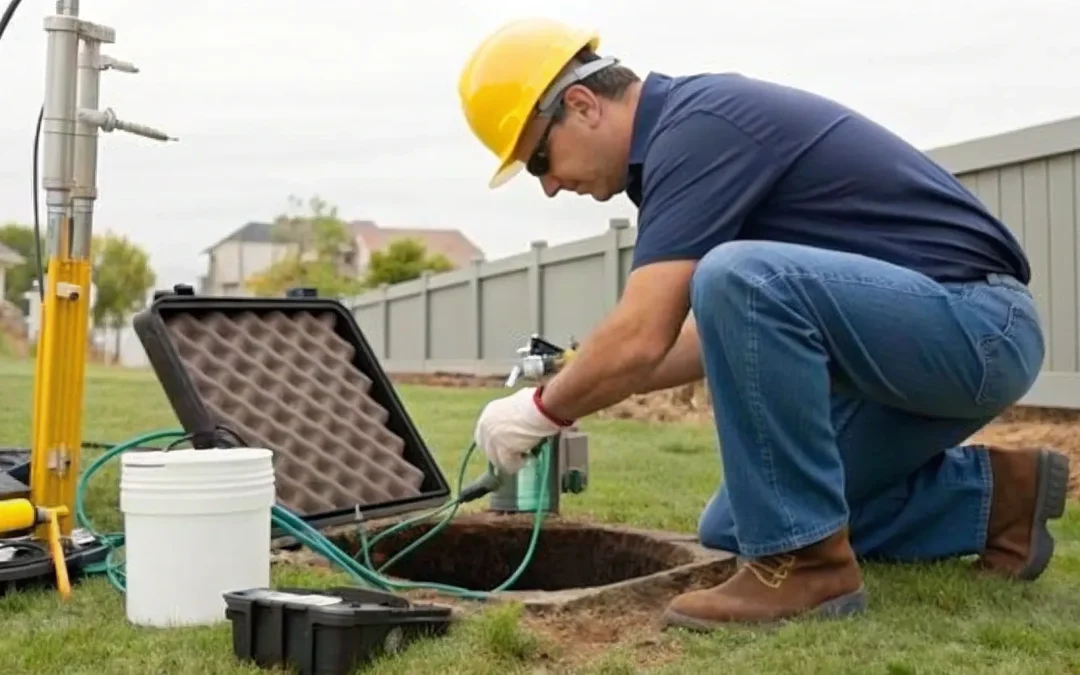
Get a Septic System Design That Saves You Time, Money & Headaches
Avoid rework, prevent delays, and get fully compliant septic plans engineered specifically for your property. Land Perc provides clear designs, accurate soil data, and smooth permitting so your project moves forward without surprises.
Start a New OrderFor builders and developers, time is money, and unforeseen delays can derail a project’s budget and timeline. One of the most common early-stage hurdles in rural or suburban development is the septic system approval process. It all starts with the perc test. A failed test or a misstep in the procedure can lead to costly redesigns and significant permitting headaches. That’s why a clear understanding of the septic perc test requirements is so important from day one. Knowing what professionals look for and how to prepare your site properly can save you from these preventable setbacks and keep your project moving forward.
Key Takeaways
- Perc Tests Are Non-Negotiable: This required test determines your soil’s absorption rate, which dictates the type and design of the septic system your property can support.
- Proper Preparation is Crucial for Success: To ensure a passing result, hire a qualified professional, clear the proposed drainfield area of all debris, and schedule the test during a dry period to get an accurate soil reading.
- A Failed Test Has Solutions: A failed test just means a standard system isn’t suitable; your options include testing a different spot on the property or working with an expert to design an alternative system that works with your site’s specific conditions.
What is a Septic Perc Test and Why Do You Need One?
If you’re building on a property without access to a public sewer, a septic system is your solution for wastewater management. But before you can install one, you need to know if the ground itself is up to the task. That’s where a percolation test, or “perc test,” comes in. This simple test is one of the most critical first steps in the development process, determining whether your site is suitable for a septic system and what kind of system you’ll need. It’s a non-negotiable step that ensures the long-term safety and functionality of your project.
The Basics of Percolation Testing
Think of a perc test as a way to measure your soil’s thirst. It’s a straightforward procedure that determines how quickly water drains through the soil on your property. This absorption rate is crucial because a septic system’s drainfield releases treated wastewater back into the ground. If the soil drains too slowly, you could end up with a soggy, flooded yard and a failing system. If it drains too quickly, the wastewater might not be filtered properly before reaching the groundwater. A professional soil and percolation test finds that “just right” balance, ensuring your septic system works efficiently and protects the local environment.
Meeting Health Department Requirements
In Florida, a perc test isn’t just a good idea; it’s a legal requirement dictated by local health departments. The specific rules and procedures can vary from one county to the next, so it’s essential to understand what your local authorities expect. Generally, the process begins with a thorough soil investigation, often conducted with a county representative on-site. This is followed by the perc test itself. The data gathered from these steps provides the foundation for a proper septic system design that is guaranteed to meet all local codes and regulations, paving the way for a smooth permitting process.
When is a Perc Test Mandatory?
You’ll need a perc test in several common scenarios. The most obvious is before installing a new septic system for a new home or commercial building. It’s a foundational requirement for any new construction project that isn’t connected to a city sewer line. You will also likely need one if you are replacing or significantly upgrading an older, failing septic system. Furthermore, perc tests are often required during real estate transactions. If you’re buying, selling, or developing a parcel of land, a successful perc test can be a condition of the sale, providing assurance that the property is buildable.
What Are the Requirements for a Septic Perc Test?
A successful perc test is more than just digging a few holes. To get accurate results that satisfy health department regulations, you need to meet several key requirements. Proper planning at this stage prevents costly delays and ensures your septic system design is built on reliable data.
Finding a Licensed Professional
The first step is hiring a qualified professional, typically a soil engineer or licensed septic system designer in Florida. An expert performs the test according to state and local codes and correctly interprets the results. With over two decades of experience, our team understands Florida’s unique soil conditions. Choosing a seasoned professional ensures the process is handled accurately, saving you from potential redesigns and permitting headaches.
Preparing Your Site for the Test
Your site must be ready before the testing crew arrives. This means clearing the proposed drainfield area of trees, stumps, and construction debris. The location should be clearly marked and accessible for equipment like an excavator or hand auger. A properly prepared site allows the team to work efficiently and conduct the test in the most suitable locations. Our septic system design services include guidance on site preparation, ensuring everything is in order for a smooth test day.
Ideal Timing and Weather Conditions
Timing is everything for a perc test. The test measures how quickly water drains through the soil, and saturated ground from recent rainfall can cause a test to fail. It’s best to schedule your test during a dry spell when the water table is at a typical level. In Florida, this requires careful planning around our rainy seasons. We monitor weather conditions and advise on the optimal time to test, giving your site the best chance for an accurate reading.
Gathering the Right Documentation
Once the test is complete, you’ll receive an official report. This is a crucial document required for your septic system permit application. The report details the soil analysis, percolation rates, and a site map with test locations, which forms the basis of your septic system design. We ensure your report is comprehensive, accurate, and ready for submission to the health department. We can manage the entire process, from testing to final documentation.
How is a Septic Perc Test Performed?
A septic perc test is a systematic process that professionals use to get a clear picture of your soil’s drainage capabilities. Each step, from the initial site walk to the final calculations, is designed to gather accurate data. This information is essential for designing a septic system that is both effective and compliant with Florida’s health codes. Understanding how the test is performed can help you prepare your site and know what to expect when our team arrives.
Evaluating the Site and Assessing the Soil
The process begins with a professional evaluation of the property. This involves a soil investigation, often with a county representative, to understand the soil profile and identify the most suitable location for the future drainfield. We analyze the site’s topography, water table depth, and proximity to any wells or water bodies. This initial site evaluation is crucial because it ensures we test the most viable spot on your property, setting the project up for success from the start.
Preparing the Test Holes
Once the best location is chosen, a technician prepares test holes according to local health department specifications. This means digging holes to a specific depth and diameter that corresponds to the proposed drainfield. To get an accurate reading, the holes are “presoaked” by filling them with water for several hours. This step saturates the soil, simulating the conditions of an active septic system and ensuring the final measurements are consistent and reliable. It’s a vital detail for an accurate test.
Applying and Measuring Water
This is the core of the test. After presoaking, the holes are filled with water to a designated level. A technician then measures how quickly the water level drops, recording the measurement in inches at regular intervals. This process continues until the rate of absorption stabilizes. This careful timing provides the hard data, known as the “percolation rate,” which tells us if the soil can effectively handle wastewater. It’s a precise process that removes any guesswork from the design phase.
Interpreting the Results
Finally, we turn the data into actionable information. The percolation rate is calculated in minutes per inch and compared against standards required by Florida’s health codes. Soil that drains too slowly can cause backups, while soil that drains too quickly may not filter wastewater properly. These results are the foundation for a proper septic system design, directly influencing the size and type of the drainfield. Our expertise ensures your system is designed for long-term performance and full compliance.
Why Do Perc Tests Fail (And How Can You Prepare)?
A failed perc test can feel like a major roadblock, delaying your project timeline and adding unexpected costs. But it doesn’t have to be a dealbreaker. Understanding why a test might fail is the first step toward preparing your site for success and finding a workable solution if the initial results aren’t what you hoped for. Most failures come down to a few key factors: the soil itself, water levels, and where the test is performed. By addressing these elements proactively, you can approach the permitting process with confidence.
Common Soil and Drainage Problems
The most common reason for a failed perc test is the soil composition. The test is designed to measure how quickly water drains, and Florida’s diverse soil types can present unique challenges. If you’re working with heavy, dense clay, water will drain too slowly. This can cause wastewater to pool on the surface, creating a serious health hazard. On the other end of the spectrum, extremely sandy or gravelly soil might allow water to drain too quickly, meaning the effluent isn’t properly treated before reaching the groundwater. The goal is to find a balance. A preliminary soil and percolation test is the best way to identify the soil’s properties and ensure it can support a conventional septic system.
High Water Tables and Environmental Factors
Even with ideal soil, a high water table can stop a project in its tracks. A septic drainfield requires a certain amount of unsaturated soil beneath it to effectively filter wastewater. In many parts of Florida, especially on flat properties or during the rainy season, the groundwater level can be too close to the surface. This is why a wet weather groundwater test is sometimes required to ensure the site is viable year-round. Other environmental factors, like the property’s slope or its proximity to wetlands, can also influence drainage and impact your test results. A thorough site evaluation considers these conditions to prevent surprises down the line.
Avoiding Common Site Selection Mistakes
Where you test on a property is just as important as the soil itself. A common mistake is choosing a test location without considering the full scope of the site plan. Placing the test in an area with poor surface drainage, on a steep slope, or too close to a proposed foundation can lead to an automatic failure. It’s also critical to account for local health department regulations, which dictate minimum setback distances from wells, property lines, and bodies of water. Skipping a professional site assessment can lead to choosing a spot that’s simply not viable, causing unnecessary delays and expenses.
How to Prepare Your Property for a Successful Test
The best way to prepare for a perc test is to work with an expert from the beginning. We strongly recommend a preliminary soil investigation before you schedule the official test with the health department. This allows us to identify the most promising location on the property for the septic system and address any potential issues ahead of time. Once a suitable area is chosen, make sure it is cleared of any brush, debris, or stored materials so the equipment can access it easily. Taking these preparatory steps with an experienced team like ours, which has completed over 40,000 projects, significantly increases your chances of a successful outcome.
What Are Your Options if a Perc Test Fails?
A failed perc test can feel like a major setback, but it’s rarely the end of the road for your project. Instead of seeing it as a stop sign, think of it as a detour. A failed test simply means a conventional septic system isn’t the right fit for the site’s specific soil conditions. The good news is that there are several other paths forward. From exploring different locations on the property to designing specialized systems, a solution is almost always within reach. Let’s walk through your options.
Exploring Alternative Septic Systems
When standard soil conditions aren’t present, a standard septic system won’t work. This is where alternative systems come in. These are engineered solutions designed specifically for challenging sites with poor drainage, high water tables, or other limiting factors. Options like mound systems, aerobic treatment units (ATUs), or drip irrigation systems are built to overcome the issues that cause a perc test to fail. While they are typically more complex and can involve a higher initial investment than conventional systems, they make development possible on lots that would otherwise be unusable. Understanding these septic system design options is the first step toward finding the right fit for your property.
Retesting Your Property
Before you commit to a more complex system, it’s worth asking if the first test told the whole story. Soil composition can change dramatically across a single property, and a failed test in one spot doesn’t guarantee the entire parcel is unsuitable. An experienced professional might identify a more promising location for a second test. Sometimes, the solution is as simple as digging deeper to find a more permeable soil layer beneath the surface. Retesting is often a cost-effective next step that could still allow for a conventional system, saving you time and money. It’s a crucial part of the due diligence process before moving on to more engineered solutions.
Considering Advanced Treatment Systems
If retesting isn’t an option, an advanced treatment system might be the perfect solution. Unlike conventional systems that rely heavily on the soil for filtration, these systems treat wastewater to a much higher standard before it’s released into the drainfield. Technologies like aerobic treatment units (ATUs) use oxygen to break down waste more effectively, while media filters use materials like sand or textiles to purify the effluent. This high level of treatment means the drainfield has less work to do, making these systems ideal for sites with slow-percolating soil or those near sensitive environmental areas. They provide an effective, reliable wastewater solution for even the most difficult properties.
Working with a Professional for a Solution
Navigating the aftermath of a failed perc test is much easier with an expert in your corner. A professional can accurately interpret the results, determine why the test failed, and outline the most viable and cost-effective paths forward. Whether it’s identifying a better location for a retest or designing the right alternative system for your site’s unique conditions, an experienced team takes the guesswork out of the process. At Land Perc, we have over two decades of experience turning challenging sites into successful projects. If you’re facing a failed perc test, start a new order with us, and we’ll help you find the right solution to keep your project moving forward.
Related Articles
- Septic System Design & Perc Testing Services | Land Perc FL
- Do I Need a Permit for a Septic System in Florida? – Land Perc
- Septic Permits in Florida: Do You Need One? (2025 Guide)
- Septic System Design FAQs: Perc Tests, Cost & Timeline | FL
Frequently Asked Questions
Does a failed perc test mean I can’t build on the property? Not at all. A failed test simply means a conventional septic system won’t work with the current soil conditions in that specific spot. It’s a common issue, and it opens the door to other solutions. We can explore different locations on your property for a retest or design an alternative system, like a mound or an aerobic treatment unit, that is engineered to work with challenging soil.
How can I best prepare my site to ensure a successful test? The best preparation starts with a professional site evaluation before the official test. This helps identify the most promising location from the start. Once a spot is chosen, you should clear the area of all trees, debris, and construction materials so the testing equipment has easy access. Finally, try to schedule the test during a dry period, as recent heavy rain can saturate the ground and cause an inaccurate, failing result.
Can I perform a perc test myself to save money? While you can dig a hole and pour water in it, the results won’t be accepted for a permit. Florida health departments require that a perc test be performed and certified by a licensed professional, like a soil engineer or septic designer. This ensures the test is conducted according to strict local codes and that the data is interpreted correctly for the official septic system design.
What’s the next step after my perc test passes? A successful perc test provides the critical data needed for the next phase: the septic system design. The percolation rate determines the size and type of drainfield your property requires. We use these results to engineer a complete system plan that meets all state and local health codes. This official design is then submitted along with your permit application to the health department.
How long are the results of a perc test valid? Perc test results don’t last forever. While the exact timeframe can vary by county, most health departments require the test to be relatively recent to ensure it reflects the current site conditions. Factors like changes in the water table, new regulations, or significant site grading can make older results obsolete. It’s always best to plan on using the results for your permit application soon after the test is completed.