
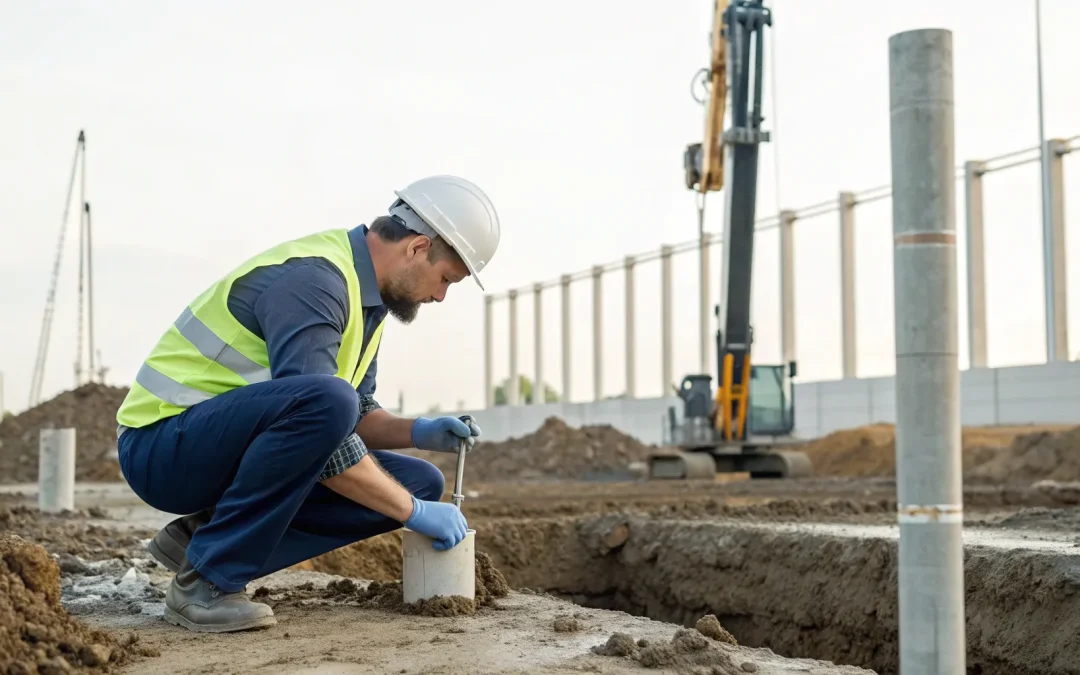
Get a Septic System Design That Saves You Time, Money & Headaches
Avoid rework, prevent delays, and get fully compliant septic plans engineered specifically for your property. Land Perc provides clear designs, accurate soil data, and smooth permitting so your project moves forward without surprises.
Start a New OrderA failed septic system is a builder’s nightmare, leading to soggy lots, contaminated groundwater, and expensive, project-halting repairs. The single most effective way to prevent this disaster is by understanding your soil’s capabilities from day one. A professional septic perc test for new construction is your first line of defense. This straightforward evaluation measures how quickly water is absorbed into the ground, providing the critical data needed to design a system that will function effectively for decades. Think of it as an insurance policy for your build; it confirms your site is viable and guides a design that protects your investment, your timeline, and Florida’s sensitive ecosystem.
Key Takeaways
- Test early to prevent costly redesigns: Schedule your perc test before finalizing site plans. The results directly influence your septic system’s location and design, helping you avoid expensive changes and delays after your build’s footprint is set.
- A perc test is part of a larger evaluation: A passing result is just one step. A complete site evaluation, including a thorough soil investigation, is required to design a septic system that is fully compliant with Florida’s health and environmental codes.
- A failed test clarifies your path forward: If your property fails, it simply means a conventional system isn’t the right fit. This result guides you toward effective solutions, like a custom-engineered system, designed specifically for your site’s unique soil conditions.
What is a Septic Perc Test and Why is it Crucial for New Builds?
If you’re building on a property without city sewer access, you’ll need a septic system. But before breaking ground, you must know if the soil can support one. This is where a septic percolation test, or “perc test,” comes in. This test is a critical first step, determining if a standard septic system is feasible and laying the groundwork for a successful build. It’s a non-negotiable part of the process that protects your investment and the local environment.
What Are Soil Percolation Rates?
A percolation rate is your soil’s absorption speed. The test measures how quickly water seeps into the ground, which is vital for a septic system’s drain field. The soil must absorb wastewater at a balanced pace. Too slow, and you risk a soggy, failed system. Too fast, and the wastewater isn’t treated before reaching groundwater. A successful perc test confirms the soil can filter effluent, which is the first step in a safe and functional septic system design. A healthy rate is typically between one and 30 minutes per inch.
How a Perc Test Protects Your Project and the Environment
A perc test is more than a formality; it’s a safeguard for your project. Accurate soil data ensures you install a septic system that functions correctly for years, preventing premature failures and costly delays. It’s your best defense against future headaches. Beyond the build site, a perc test is crucial for environmental protection. By confirming the soil can properly treat wastewater, you prevent harmful bacteria from contaminating groundwater and nearby water sources. This is a key part of meeting Florida’s strict permitting and compliance standards and building responsibly.
Common Perc Test Myths, Busted
Let’s clear up a couple of common myths. First, passing a perc test doesn’t automatically guarantee you can install a septic system. It’s a vital piece of the puzzle, but it’s just one part of a full site evaluation that includes soil analysis and system design. Second, a failed perc test isn’t always the end of the road. While it rules out a conventional system, it doesn’t mean the land is unbuildable. There are often alternative solutions, like engineered systems, for challenging soil. If you’ve hit a snag, it’s best to consult an expert to explore your options.
How Does a Septic Perc Test Work?
A percolation test, or perc test, might sound technical, but it’s a pretty straightforward process for determining how well your soil absorbs water. This simple test is the key to designing a septic system that is both effective and compliant. It tells us exactly what kind of system your property can support, ensuring long-term performance and protecting the local environment. Understanding how the test works will help you plan your project timeline and budget more effectively, avoiding surprises down the road. Let’s walk through the steps, from getting your site ready to understanding what the results mean for your build.
Prepare Your Site for Testing
First, we need to get your site ready. Before any digging happens for the perc test itself, a soil investigation is usually the first step, sometimes involving a county representative. This initial look helps us understand the soil profile and identify the best potential location for the drain field. You’ll need to have the proposed area for the septic system cleared of any brush, debris, or equipment so we have clear access. It’s also important to mark out any known underground utilities. Proper site preparation ensures the test is accurate and efficient, setting the stage for a smooth septic system design process and preventing delays down the line.
The Perc Test Process, Step-by-Step
Once the site is prepped, the perc test begins. A professional will dig a series of holes in the designated drain field area. The number and depth of these holes depend on your property’s specific conditions and local health department requirements. After digging, the holes are “pre-soaked” with water to simulate the saturated conditions of a working septic system. Then, we carefully pour a measured amount of water into each hole and time how long it takes for the water level to drop. This measurement gives us the soil’s absorption rate. It’s a straightforward but critical process that tells us exactly how quickly your soil can handle wastewater. You can find more details on our FAQs page.
How to Read Your Perc Test Results
The results of a perc test are given as a rate, typically in “minutes per inch” (MPI). This number tells you how many minutes it takes for the water in the test hole to drop by one inch. A lower MPI (a “fast” perc rate) means the soil drains quickly, while a higher MPI (a “slow” perc rate) indicates slower drainage. Florida has specific ranges that are considered acceptable. If your soil is too fast, wastewater might not be treated properly before reaching groundwater. If it’s too slow, the drain field could fail. But don’t worry if your property fails the test. It simply means a conventional system won’t work, and we’ll need to design an alternative solution. It’s a challenge, but one we can manage with expert planning. If you have questions about your results, feel free to contact us.
What Determines the Cost of a Perc Test?
Budgeting for a new construction project means accounting for every detail, and the perc test is a critical line item. The final cost isn’t a simple flat rate; it depends on your property’s size, soil conditions, and local requirements. Understanding these factors will help you plan your budget accurately and avoid surprises down the road. Think of it as an investment in your project’s foundation. A thorough test upfront ensures your septic system is designed correctly, preventing costly failures and delays. Let’s break down what goes into the price of a professional perc test in Florida.
Average Perc Test Costs in Florida
In Florida, the cost for a perc test can range from around $150 for a small, straightforward lot to over $2,000 for a larger or more complex property. The size of your parcel is a primary driver of the price. For example, a quarter-acre lot might be on the lower end, while a five-acre property will naturally require more extensive testing and a higher investment. Labor typically runs between $100 and $200 per hour, and some counties may add a flat fee of about $300. Keep in mind that any adjustments, like digging deeper test holes, can also add to the total. To get a precise quote for your project, you can start a new order with our team.
Site Conditions That Affect the Price
The unique characteristics of your land play a huge role in the perc test process and its cost. Soil composition is the biggest variable. Land with heavy clay or a lot of rock tends to drain poorly, which can complicate the test and potentially lead to a failing result. A perc test fails if water drains too slowly, not at all, or even too quickly, which can happen on steep slopes. Challenging site conditions may require more time, additional test holes, or specialized analysis, all of which can influence the final price. Our comprehensive services include detailed soil analysis to give you the clearest picture of your property’s suitability.
Factoring in Permit Fees and Other Costs
The perc test itself is just one piece of the puzzle. You also need to account for county permit fees, which are a standard part of the septic system approval process. If your property is very flat, the county might require a wet weather groundwater test in addition to the standard perc test, which would be another associated cost. It’s also smart to consider the potential costs of a failed test. If the site doesn’t pass, construction may be paused while you explore alternative system designs with the health department. Having a clear understanding of all potential expenses helps you create a realistic project budget. You can find answers to more specific questions on our FAQs page.
When Should You Schedule a Perc Test?
Timing is everything in construction, and scheduling your perc test is no exception. Getting this test done at the right moment can save you from costly delays and major changes to your site plan. Think of it as a critical checkpoint early in your project. The results directly influence your septic system design, which in turn affects the layout and feasibility of your entire build. By strategically planning your perc test, you set your project up for a smoother journey through permitting and construction, ensuring you have a solid foundation for the work ahead.
When to Schedule Your Test in the Build Timeline
The best time to schedule a perc test is during the initial stages of property development, right after the land has been surveyed but before you finalize the building’s footprint. This early timing is intentional. The test results determine if a conventional septic system is viable and, if so, where the drain field should be located. Getting this information upfront prevents you from having to redesign your site plan later. Imagine pouring a foundation only to find out the best spot for the septic system is right underneath it. By performing the test early, you can confidently map out the entire property, ensuring all components, from the structure to the septic system, work together seamlessly. This proactive approach is a core part of our septic design services.
Does the Season Affect Your Results?
In Florida, the season absolutely matters. Our state has distinct wet and dry seasons, and the groundwater level fluctuates significantly between them. Scheduling your perc test during the driest part of the year, typically in the winter or spring, will give you the most accurate results. During these months, the water table is at its lowest, allowing the soil to demonstrate its true absorption capacity. Testing during the summer rainy season can be risky. The already saturated ground and high water table can cause the soil to percolate much slower, potentially leading to a failed test on a property that would have otherwise passed. Planning your test around the weather is a simple way to avoid inaccurate results and unnecessary complications.
Aligning Your Test with Permits and Approvals
A perc test is more than just a soil assessment; it’s a required step in the permitting process. Before you even schedule the test, it’s wise to check with the local county health department. Some jurisdictions require an official to be present during the test or mandate that it be performed by a certified professional. Handling this coordination is a key part of what we do. Once the test is complete, the results become a critical component of your septic permit application. A passing result paves the way for your system design and approval. If the site fails, it doesn’t mean the project is over, but it does mean you’ll need an expert to explore alternative system options. You can find answers to common questions about this process on our FAQs page.
What Are the Site Requirements for a Perc Test?
Before you can schedule a perc test, you need to make sure your site is ready. It’s not just about finding an open patch of ground. The location must meet specific requirements related to soil quality, drainage, and local regulations to ensure a valid test and a compliant septic system. Getting these details right from the start is a critical step in keeping your construction project on schedule and on budget.
Ideal Soil and Drainage Conditions
The whole point of a perc test is to see how well the soil can absorb water. This is crucial because the soil acts as a natural filter for wastewater from the septic system. Ideally, you want soil with a good percolation rate, which is typically between 1 and 30 minutes per inch of water drop. Soils that are too dense, like heavy clay, won’t drain properly, while overly sandy soils might let water pass through too quickly without adequate filtration. Our soil and percolation testing services are designed to precisely measure these rates, giving you the clear data you need to move forward with your septic design.
Required Distances from Wells and Structures
Location is everything when it comes to septic systems. Your local health and building departments have strict rules about how far the test area, and the future drainfield, must be from other features on the property. These setbacks apply to wells, buildings, property lines, and any nearby bodies of water like lakes or streams. Following these rules is non-negotiable for getting your building permit. The slope of the land also matters. For instance, a very flat site with less than a 5% slope might trigger a requirement for additional wet weather groundwater testing to ensure the system will function correctly year-round.
Meeting Florida’s Setback and Zoning Rules
Florida’s landscape is diverse, and so are its septic regulations. What works in one county might not fly in another. This is where deep local knowledge becomes essential. You need a partner who understands the specific codes for your project’s location to ensure your septic system design is fully compliant from the start. Getting the site evaluation and design right the first time saves you from the headaches of permit rejections, costly redesigns, and major construction delays. It’s about more than just passing a test; it’s about creating a safe, effective, and long-lasting system that meets all local requirements. Understanding these nuances is key to a smooth septic system design process.
How to Choose a Qualified Perc Test Provider
Choosing the right partner for your perc test is just as important as the test itself. The results directly impact your site plan, budget, and timeline, so you need a provider who is experienced, thorough, and deeply familiar with Florida’s diverse soil conditions and regulations. A qualified expert doesn’t just dig holes and pour water; they provide accurate data and clear guidance that sets your project up for success from the ground up. This isn’t just another box to check on your pre-construction list; it’s the foundation for a functional and compliant septic system.
Think of this as a crucial investment in your build. The right team will deliver reliable results quickly, helping you avoid costly delays and unexpected design changes. They become a trusted part of your project, ensuring every step meets state and local requirements. On the other hand, an inexperienced or unreliable provider can lead to inaccurate results, failed inspections, and major headaches down the road. Taking the time to vet your options now will save you time, money, and stress, ensuring your project moves forward smoothly and with confidence.
Verify Their Licenses and Certifications
First things first, make sure any provider you consider is properly licensed. In Florida, official perc tests must be performed by a licensed professional, such as a septic system specialist, engineer, or soil scientist. Don’t be tempted by DIY test kits or handymen offering a discount; their results won’t be accepted for permits and are often inaccurate. Verifying credentials is your initial quality check. It confirms they have the training and accountability required to perform the test correctly and adhere to the strict standards set by the Florida Department of Health. A professional license is non-negotiable and protects the integrity of your project.
Key Questions to Ask Before You Hire
Before you sign a contract, have a conversation and ask a few pointed questions to gauge their expertise. Local experience is everything. Ask them, “What is your experience with perc tests in this specific area?” Soil types can vary dramatically from one part of a county to another, so you want someone who knows the local terrain. Also, inquire about their familiarity with local codes by asking, “Do you understand how Florida’s septic codes change from county to county?” A confident and detailed answer shows they have the hands-on knowledge needed to get your septic system design approved without a hitch.
Red Flags of an Unreliable Company
Be wary of anyone who makes promises that sound too good to be true. A major red flag is a provider who guarantees your property will pass or that a perc test alone secures your septic permit. A percolation test provides essential data, but it doesn’t guarantee septic development potential for a property. An honest professional will be upfront about this. Another warning sign is a provider who downplays the importance of the test or suggests you can start construction before getting the results. Proceeding without a proper soil evaluation is a recipe for disaster, potentially leading to a complete project overhaul if the site is unsuitable.
What if Your Property Fails the Perc Test?
Hearing that your property failed its perc test can feel like a major setback, but it’s far from a dealbreaker for your project. A failed test simply means a conventional septic system isn’t the right fit for your site’s specific soil conditions, which is a common hurdle in Florida where soil can vary dramatically from one lot to the next. This result is actually a crucial piece of information. It protects your build from future system failures, environmental contamination, and the costly repairs that come with them.
Think of it as a fork in the road, not a dead end. The test results guide us toward a more specialized solution that will perform effectively for the long haul. Instead of trying to force a standard system where it won’t work, we can explore alternative designs and site modifications that are better suited to the land. With over two decades of experience and 40,000 projects completed, we’ve helped countless builders and developers find the right path forward after a failed perc test. The key is to work with a team that understands Florida’s unique geology and can engineer a solution that meets both regulatory standards and your project’s needs.
Alternative Septic System Options
When your soil doesn’t percolate quickly enough, the solution is to install a system that treats wastewater more thoroughly before it’s released. An engineered system, also known as an alternative septic system, is designed to do just that. These systems often use advanced technology like aerobic treatment units (ATUs) that introduce oxygen to break down waste more efficiently. Another common option is a mound system, which uses a raised sand bed to create an artificial drainfield above the natural, less-permeable soil. While these systems are more complex and have a higher initial cost than conventional ones, they are reliable, approved solutions for properties with challenging soil, a high water table, or limited space.
Retesting and Site Modification Solutions
Before jumping to an engineered system, it’s worth exploring if a different approach on the same site could yield a passing result. Soil conditions can change significantly across a property, so testing an alternative location for the drainfield is often the first logical step. Sometimes, digging deeper test holes can also reveal more suitable soil layers. If retesting isn’t successful, site modifications may be an option. This could involve bringing in specific types of sand or soil to build a drainfield area that meets state requirements. We can help you evaluate these possibilities and determine the most practical and cost-effective strategy to keep your project moving forward.
Engineered Systems for Challenging Soil
If retesting and site modifications aren’t viable, a custom-engineered septic system is the definitive solution. These systems are specifically designed by professionals to overcome your property’s limitations, ensuring safe and effective wastewater management that complies with all Florida health codes. Our team specializes in custom septic system design, creating tailored plans for ATUs, mound systems, and other performance-based treatment systems. We handle everything from the initial soil analysis to the final design and permitting, providing a clear roadmap for your installers. If you’re facing a challenging site, you can start a new order with us to get a design that works.
What Are Florida’s Perc Test Regulations?
When you’re building in Florida, understanding the state’s perc test regulations is non-negotiable. These rules are in place to ensure every new septic system functions correctly, protecting both public health and Florida’s sensitive environment. The regulations aren’t a single, statewide mandate but rather a combination of foundational standards set by the Florida Department of Health and specific requirements enforced at the county level.
For builders and developers, this means the path to approval involves more than just a simple soil test. It requires a comprehensive site evaluation, careful adherence to local codes, and a clear understanding of the environmental guidelines that govern septic system installation. Getting this right from the start prevents costly delays and ensures your project moves forward smoothly. Navigating these rules is a critical step in the pre-construction process, laying the groundwork for a successful and compliant build.
State Health Department Standards
The Florida Department of Health establishes the baseline rules for all onsite sewage treatment and disposal systems (OSTDS), which includes septic systems. It’s important to know that a passing perc test alone doesn’t automatically greenlight a property for septic development. Instead, it’s one piece of a larger, required evaluation.
The official process begins with a thorough soil investigation, often conducted with a county representative present. This initial step assesses the soil profile and characteristics. Following the soil survey, the percolation test is performed to measure water absorption rates. The data from both of these evaluations is then used to create a septic system design that is submitted for county approval. This multi-step process ensures the proposed system is perfectly suited for the site’s specific conditions, guaranteeing long-term performance and compliance.
What to Know About Local Permitting
While the state sets the general framework, the real gatekeepers for septic permits are the local county health and building departments. Each of Florida’s 67 counties can have its own specific rules and interpretations of the state code, which are influenced by local soil types, water tables, and environmental priorities. This is why you might find that the requirements in Miami-Dade County differ from those in Alachua County.
Before you even schedule a perc test, your first call should be to the local permitting authority for the project’s location. They will provide the exact requirements you need to meet to obtain a building permit. This is where working with an experienced local expert can save you significant time and headaches. A team that understands the nuances of different county regulations can help you prepare a complete and accurate permit application package, avoiding common pitfalls that can stall a project.
Staying Compliant with Environmental Guidelines
At its core, a perc test is an environmental protection tool. Its primary job is to confirm that the soil can properly absorb and filter wastewater. This is especially critical in Florida, where a high water table and porous limestone geology make groundwater vulnerable to contamination. A failed perc test indicates that a conventional septic system would likely overwhelm the soil, allowing untreated effluent to pollute groundwater, nearby wells, and sensitive ecosystems.
Staying compliant with these environmental guidelines is about more than just getting a permit. It’s about responsible land development. A properly sited and designed septic system, based on accurate soil and perc test data, ensures that wastewater is treated naturally before it re-enters the water cycle. This protects the health of the community and preserves the natural beauty that makes Florida a desirable place to live and build.
Plan Your Perc Test for a Successful Build
A successful construction project is all about getting the foundational steps right. When it comes to properties needing a septic system, planning your perc test is one of the most critical early moves you can make. Getting this test done at the right time, with the right team, prevents major headaches and costly redesigns down the road. Think of it as setting your project up for success from the ground up.
The perc test should be one of the first items on your pre-construction checklist. It needs to happen during the initial stages of development, well before you break ground or even finalize your site plans. Why? Because the results directly influence where you can place the septic system and, in some cases, the home itself. Discovering that your chosen spot has poor drainage after plans are drawn is a recipe for expensive changes and frustrating delays. Getting a professional soil evaluation early on gives you the data you need to build with confidence.
It’s important to understand that a perc test is just one piece of the puzzle. A passing perc test alone doesn’t guarantee you can install a standard septic system. The process really begins with a thorough soil investigation to understand the soil profile, followed by the percolation test to measure water absorption. Only after gathering all this data can a proper septic system design be created that meets Florida’s health codes and your site’s specific conditions. Skipping straight to the perc test without the initial soil analysis can give you an incomplete picture.
So, what happens if you don’t plan properly? The worst-case scenario is starting construction before you know what you’re working with. Imagine pouring a foundation only to find out the soil won’t support a conventional septic system. This can bring your entire project to a halt, forcing you to explore more complex and expensive alternative systems or even redesign the home’s footprint. A failed test isn’t the end of the world, but finding out too late in the game is a costly mistake that’s entirely avoidable with proper planning.
To ensure a smooth process, make sure the test area is cleared and accessible for equipment. During installation, it’s also a good practice to have your contractor save the topsoil in a separate location to be used for the final grading. Most importantly, work with a team that understands the entire process from soil testing to final permitting. When you’re ready to get started and ensure your build stays on track, you can start a new order with us to handle the entire site evaluation.
Related Articles
- Septic System Design & Perc Testing Services | Land Perc FL
- Septic System Design Experts in Florida | Trusted by 35,000+ | Land Perc
- Land Perc Blogs: Septic Design, Perc Tests & FL Regulations
Frequently Asked Questions
What’s the difference between a soil investigation and a perc test? Think of the soil investigation as the first chapter and the perc test as the second. The investigation is a broader look at your soil’s profile, where we examine its layers, texture, and composition to find the most promising area for a septic system. The perc test is the more focused follow-up, where we measure the water absorption rate in that specific, pre-approved spot. You need both for a complete picture and to satisfy county requirements.
Can I do a perc test myself to save money? While it might seem like a way to cut costs, performing a perc test yourself isn’t a viable option for permitting. Florida health departments require that official tests be conducted by a licensed professional, like an engineer or certified septic specialist. The results from a DIY test won’t be accepted for your permit application, so you would end up having to pay for a professional one anyway. It’s best to invest in a certified test from the start to ensure accuracy and keep your project on track.
How long are my perc test results valid? This is a great question for planning long-term projects. Generally, perc test results are considered valid for a specific period, which can vary by county but is often around one to two years. If you have a significant delay between testing and applying for your septic permit, you may need to have the test redone. It’s always a good idea to confirm the validity period with your local health department when you begin the planning process.
What’s the most common reason for a perc test to fail in Florida? In Florida, the two most common culprits for a failed perc test are a high seasonal water table and dense, clay-heavy soil. During our wet season, the ground can become saturated, preventing it from absorbing more water and leading to a slow result. In other areas, layers of dense clay, sometimes called hardpan, can act like a barrier that water just can’t penetrate quickly enough. Both issues highlight why a thorough site evaluation is so important here.
If my property fails, does that mean I have to get an expensive engineered system? Not necessarily. A failed test is the starting point for a new strategy, not an automatic sentence to a high-cost system. The first step is often to explore other potential drainfield locations on your property, as soil can vary quite a bit even over short distances. If that doesn’t work, we can look into site modifications. An engineered system is the solution for when these other options aren’t feasible, but it’s not always the immediate next step.